Main content
Polly J. Price: News Releases and In the News
Price explains Supreme Court decision on birthright citizenship
Price explains Supreme Court ruling on birthright citizenship
Price: Redefining birthright citizenship would create legal mess
Price on whether stripping dual citizenship is constitutional
What We Can Learn from America's Pandemic Responses
Asa Griggs Candler Professor of Law Polly Price, author of Plagues in the Nation: How Epidemics Shaped America, sheds light on how the US has handled major outbreaks throughout history—from smallpox to COVID-19—and how we can use these lessons to prepare for the next one.
Price: Why the U.S. struggles with health emergencies
COVID and the Future of Plague Response
Interview with Emory Law’s Polly Price
Podcast unpacks Price's new book on epidemics, plague
Price's forthcoming book on epidemics earns starred review
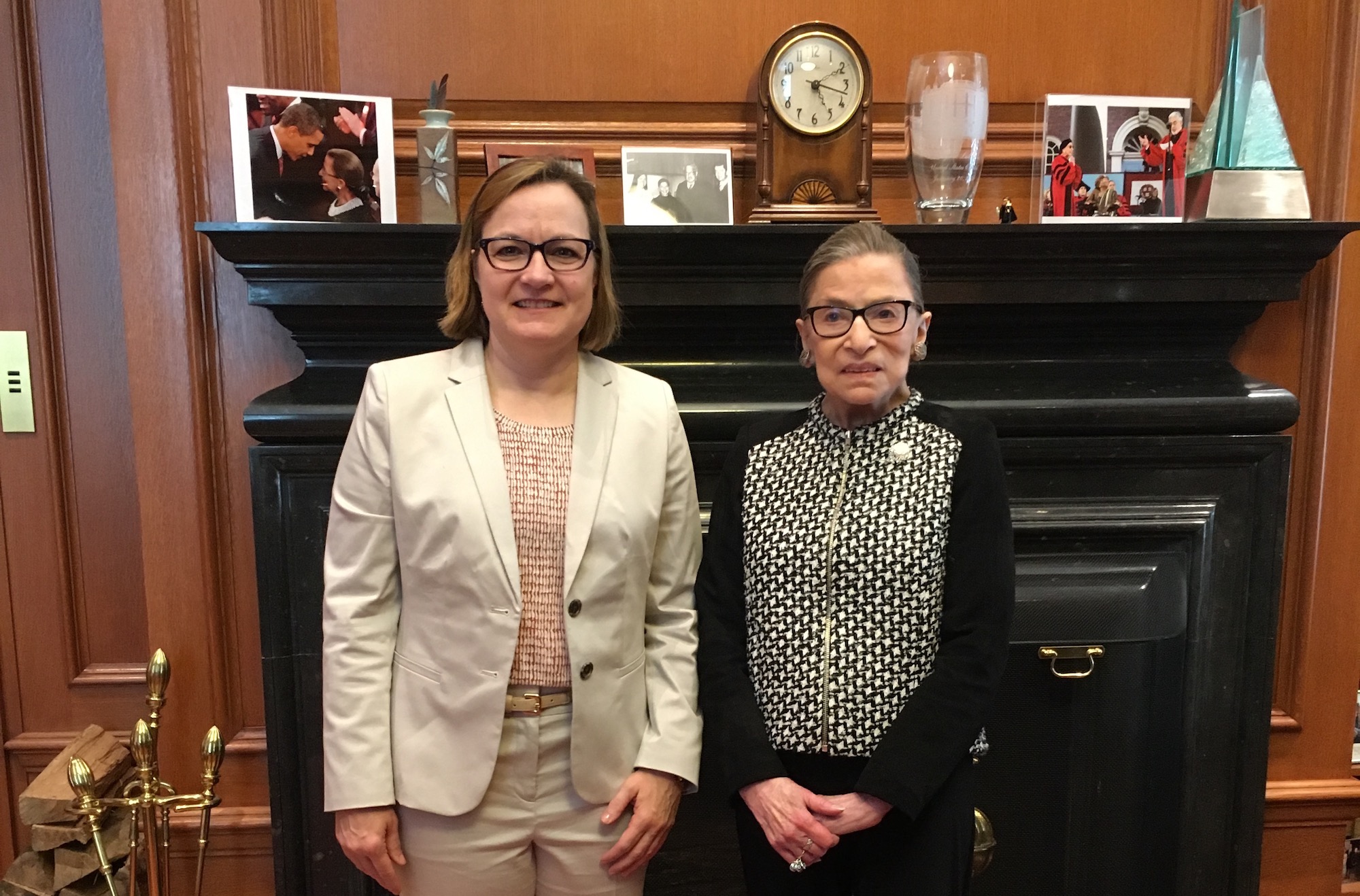
Price's 2009 book among those in Justice Ginsburg's personal library
Professor Polly Price’s 2009 biography of Justice Richard S. Arnold was among those in the late Supreme Court Associate Justice Ruth Bader Ginsburg’s personal library, which was recently auctioned.
Price: Pandemic perception influenced by where you live
Price: Vaccine mandate in Georgia courtrooms unlikely
Price: It's doubtful Biden can challenge states' anti-mask policies
Price: State COVID-19 restrictions based on science will withstand lawsuits
As long as a state can show its coronavirus rules are based on scientific evidence, it's unlikely a court will overturn the restrictions, Emory Law Professor Polly Price tells Law 360.
Price: Legislators attempt to rein in governors' emergency powers
In the past year, at least half of the state legislatures proposed limiting governors' emergency powers. Defining when congressional oversight kicks in or public health takes over may be a good idea but "legislating in the midst of an emergency can be a very bad idea," Asa Griggs Candler Professor of Law Polly Price tells Stateline.
Price: Biden's COVID-19 plans are what health officials want
The major points of President Joe Biden's COVID-19 plan are what many state and local health officials have been waiting for, Asa Griggs Candler Professor Polly Price tells NBC. That is: increased testing, boosting PPE supplies via the Defense Production Act and using the CDC's expertise to distribute the vaccine.
Price: There's still time for a better COVID-19 response
"The next presidential term will commence exactly one year after the first confirmed U.S. case of COVID-19," Asa Griggs Candler Professor of Law Polly Price writes for the American Constitution Society. "The U.S. has since recorded the highest number of COVID-19 deaths and infections in the world. Because an estimated 90 percent of Americans remain vulnerable to infection, the next administration will continue to face the greatest public health threat in more than a century, even if a vaccine does become widely available."
Price: Why don't people quarantine? They aren't being paid
Conflicts over remote work and leave are the most common type of COVID-19 employment litigation in the United States, according to The Atlantic. Asa Griggs Candler Professor of Law Polly Price was quoted in a story about how to contain COVID-19 until widespread vaccination is achieved. Isolating those who are exposed is effective, but enforcing it is difficult. "We don't really pay people to stay at home to quarantine," Price said.
Price: Fines may help state's effort to enforce masks to slow pandemic
Connecticut will begin issuing $100 fines to those who refuse to wear masks in public to slow the spread of the coronavirus, NBC news reports. Professor Polly Price says the fines could be effective in much the same way speeding tickets encourage people to slow down. However, she was dubious on whether it is a "good use of police time." It may be more effective for businesses to adapt a policy on masks similar to the "no shoes, no shirt, no service" concept.
Price: Denying first-time DACA applicants violates court rulings
Despite a Supreme Court ruling that the DACA program could not be dismantled, the Department of Homeland Security said on July 28 that it will deny all first-time applicants. Professor Polly Price tells the Orlando Sentinel that the Trump administration could try again to legally end DACA, which benefits about 700,000 immigrants nationwide, but the program's terms can’t be modified in the meantime. "Until that is done, there's absolutely no authority and support for this proposition that [DHS] cannot accept new applications," she said. “This is a violation of those court rulings."
Kemp lawsuit to prevent mayors from requiring masks must prove 'irreparable harm,' Price says
Gov. Brian Kemp has sued Atlanta Mayor Keisha Lance Bottoms and challenged restrictions she implemented, which include an ordinance mandating residents wear masks to help stem the spread of COVID-19. It's part of a growing clash between the governor and municipalities over who has authority over how the state handles the ongoing pandemic. Kemp may not win an injunction unless he can meet standard of "irreparable harm," Professor Polly Price tells TIME magazine.
Price: Kemp's lawsuit against Atlanta mayor wastes time, resources
Professor Polly Price criticized Georgia Gov. Brian Kemp's recent lawsuit against Atlanta Mayor Keisha Bottoms. It challenges her order requiring Atlantans to wear masks in public to prevent the spread of COVID-19. Kemp has previously barred local governments from taking more restrictive steps than the state, but on Wednesday he explicitly banned cities and counties from requiring face coverings. Price says it's unlikely Kemp's order would stand up in court. "But rather than force the question, why not allow local decision-making, as Texas has done, rather than waste time and resources engaging in litigation?" Price told the Atlanta Journal-Constitution.
Price talks with Dan Abrams on the importance of masks during pandemic
Professor Polly Price spoke with Dan Abrams on how face coverings work to prevent the spread of COVID-19, and Georgia Gov. Brian Kemp's order that says municipalities can't pass laws requiring them in public. "The Governor of Georgia does not have authority to override local face mask requirements," Price tweeted. "Do the right thing."
Price's blog previews new book 'Plagues in the Nation'
"Plagues in the Nation" is a narrative history of America through major outbreaks, one that examines how law and government affected the outcome of the epidemics that struck America, and how those outbreaks have in turn shaped our government. Professor Polly Price's book examines efforts to control COVID-19 and also, the panic that resulted when Ebola arrived in n America.
State COVID-19 quarantine efforts violate constitutional right to travel, Price says
As states try to enforce 14-day #COVID-19 quarantines for travelers from areas where the coronavirus rate is spiking, Professor Polly Price says such pronouncements bump up against U.S. citizens' constitutional right to travel from one state to another. "No state can prevent you from coming in," Price tells NBC news. "What these states are doing is imposing conditions on that travel. When it goes from 'we're going to request that you self-quarantine for a period of time' to 'we're going to arrest you or fine you if you don't,' that's when constitutional issues become tricky."
SCOTUS DACA decision raises questions for new applicants, Price says
Despite the Supreme Court's decision on the Deferred Action for Childhood Arrivals program, it could take a court order to force the government to resume processing new DACA applications, Professor Polly Price tells WABE. Since the Trump administration attempted to end the program in 2017, only people who were already enrolled have been able to remain in America legally and no new applicants have been accepted. So one questions is, "does this mean the DHS has to accept new applicants? It's not clear that's the case," Price says.
A history of law, face coverings, public health in the U.S.
Professor Polly Price and her research assistant Patrick Diaz 22L examined how state governments required and enforced the wearing of face masks during public health crises in the history of the United States, in an essay published by the American Constitution Society.
States may create new COVID-19 laws, but Supreme Court involvement unlikely, Price says
As governors balance protecting public health against individual liberties, federal lawsuits are stacking up, including an estimated 240 based on civil rights, USA Today reports. Emory Law Professor Polly Price notes the U.S. Supreme Court declined to hear a Pennsylvania case that challenged a governor's order to close nonessential businesses. But given the impact of the virus on public health issues, "I tend to think there will be some new law made only because there are new scenarios that courts haven’t encountered before," she said.
Price's Carnegie Fellowship informs forthcoming book, Plagues in the Nation
In 2017, Emory Law Professor Polly Price was named an Andrew Carnegie Fellow. Building on her interest in writing on how governments confront contagious diseases, she did research at the U.S./Mexico border with the CDC and public health departments, which will inform her upcoming book, Plagues in the Nation.
Price explains why some Americans resist wearing masks to prevent spread of COVID-19
Resistance to wearing masks to prevent spread of the coronavirus is a very American phenomenon, the BBC reports. Asa Griggs Candler Professor of Law Polly Price explains the backlash.
Price: President can't require states to reopen for business
Professor Polly Price says President Trump's statement that he has total authority to declare states open for business isn't correct. "Congress could conceivably legislate to override state control of commerce, but not the president by himself," she told the Dallas Morning News, for a story concerning restarting commerce during the COVID-19 pandemic.
Our constitutional duty is to not endanger others, Price says
Some rural Americans see the corona virus as a distant, perhaps overblown, crisis. But as cases climb across the U.S. we should recall our constitutional duties “include not endangering others,” Professor Polly Price tells the Christian Science Monitor.
Why isn't there a national lockdown? Price explains
Although it may seem logical for the the president to announce the entire country should go into lockdown, the legalities aren't that simple, Professor Polly Price tells CNN.
White House can't enforce blanket national quarantine, Price says
As more states start to issue stay-at-home orders, rumors have spread that the country is under a lockdown, something the Federal Emergency Management Agency has debunked on its website. Professor Polly Price tells NPR any such power lies with the states. "If you're talking about quarantine in terms of encouraging people to stay home or closing businesses ... I think from the White House that can be advisory only and that those are exclusively state powers."
Price: Practices that made a difference in the 1918 epidemic
Professor Polly Price, who's writing a book on epidemics, tells WABE 90.1 what policies made a difference in the 1918 pandemic--globally and here in Georgia.
Price: Governors largely control states' public health policies
While President Trump says he wants the country "opened up and raring to go" by Easter, that decision will largely be made by governors. "State and local governments’ primary obligation, their primary responsibility, is the health of their populations," Professor Polly Price told Time magazine. The success of social distancing already relies mostly on the honor system she says. But mixed messaging from federal state or local politicians could lead people to ignore social distancing guidelines altogether.
How a fragmented country fights a pandemic
"The U.S. legal system has been here before--just over a century ago, during the pandemic influenza of 1918–1919, the most severe pandemic in recent history," Professor Polly Price writes in an essay for The Atlantic. "Then, too, public officials faced constraints on their knowledge, authority, and capacity to deal with the crisis. The result was a patchwork approach that radically, if temporarily, changed American life."
Price: What powers do local, state and federal governments have in a public health crisis?
As part of the National Constitution Center's Interactive Constitution series, Professor Polly Price talks with host Jeffrey Rosen and Professor Ed Richards about what powers local, state, and federal governments have to manage a public health crisis and the legal and constitutional rights Americans maintain.
Price: CDC can help governors make tough decisions on COVID-19 closures
This weekend, governors varied widely on their COVID-19 stances: some took measures to shut down restaurants and bars, while others tweeted about being in public and "supporting local businesses." Because of federalism issues, the White House can't do much to force closures, said Professor Polly Price. But the CDC can model responsible action, she said. "The strong direction of the CDC is really helpful here because these are very unpopular decisions--and brave decisions, as far as I'm concerned--to close down public gathering," she said. "To the extent that they need political cover for doing so, if the CDC is giving them this advice, that could give them legal cover."
Price: For health officials, enforcing quarantine relies on the honor system
Health officials nationwide are gauging how to enforce quarantine, and what to do when people don't follow those rules. Right now, it's pretty much the honor system, Professor Polly Price tells the Wall Street Journal. "Public-health people themselves can't arrest someone or force them to stay somewhere, and they try to use that as an absolute last resort."
Price: How do cities handle coronavirus quarantine for the homeless?
Most of the thousands of Americans currently under quarantine are at home, but what about the homeless? Professor Polly Price tells CityLab that urban centers with large homeless populations are likely already considering how to humanely handle a shelter outbreak.
Price: City's attempt to block coronavirus patients presents rare legal question
Costa Mesa's attempt to block state plans to house coronavirus patients there presents a rare legal question, the New York Times reports. "This is a new one in terms of claiming a right not to have infectious disease introduced into your community," said Emory Law Professor Polly Price. Although cities and towns once claimed "an absolute right" to guard against disease, she said, state-level control over isolation and quarantine has been the norm for more than a century.
Dedicated quarantine centers a relic of the past, Price says
While the U.S. has quarantine "stations" in 20 cities, they're not designed for long-term stays and monitoring, the San Jose Mercury News reports. Federal and state health officials sought to move coronavirus patients to Costa Mesa's 125-acre Fairview Developmental Center, a state-owned facility for people with mental disabilities, which is now empty. "Governments don't keep quarantine facilities readily available," said Emory Law Professor Polly Price. "We don't, as a general rule, have facilities just waiting around just to be used for rarely needed quarantines." State and federal official say by refusing to accept the quarantine, Costa Mesa could threaten the health of the rest of the nation.
Price weighs in on Costa Mesa's attempt to block moving coronavirus patients there
A federal judge directed federal and state officials to answer the questions of Costa Mesa, California, residents about plans to bring Americans who have tested positive for the coronavirus to a closed mental-health facility in the city, the Washington Post reports. But the judge also cautioned that the city does not have veto power over state and federal quarantine decisions. Emory Law Professor Polly Price agrees. "There isn’t really a federal order to challenge here because the key fact was that California's state public health department . . . they're in complete control."
Price: Quarantine in the U.S. isn't in the hands of the federal government
A coronavirus quarantine in the U.S. could be difficult, Professor Polly Price writes for The Atlantic. Except at the nation's borders, the federal government isn't in charge. Our defense against epidemic is divided among 2,684 state, local and tribal public-health departments.
Travel ban won't stop coronavirus entering the U.S.
The Trump administration decision to bar entry to foreigners coming from China won't stop the coronavirus from entering the US, experts tell VOA News. "It is true that the fewer people who potentially carry the virus who come into an area, the less likelihood of further spread," said Emory Law Professor Polly Price, a public health expert. "But, of course, we already know it's in the United States."
Price on avoiding panic, containing coronavirus
In seeking ways to contain the coronavirus, U.S. health officials and politicians no doubt are recalling the 2014 Ebola cases. "It was never a huge threat in the U.S., but it caused a huge panic," Professor Polly Price tells STAT. In Dallas, where the first U.S. case of Ebola was detected, immediate family members of the patient and the two nurses who took care of him were quarantined in their homes, but larger measures, including shutting down transit and school closures, were proposed but never ordered. "They worked through that nicely," Price said.
Price explains public health precautions for coronavirus
The CDC is requiring U.S. citizens returning from mainland China to undergo proactive health screenings at ports of entry and spend up to 14 days in self-quarantine--an action it hasn't taken for more than 50 years. While "isolation" refers to separating someone who is already sick, or is believed to be, from healthy people, "quarantine" is used for isolating people that are not yet sick and may never get sick but may have been exposed to something contagious, Professor Polly Price tells ABC News.
SCOTUS Analysis: A preview of DACA
On the last day of the term, the justices surprised many by agreeing to take up DACA, setting in motion for next year the highly anticipated argument over immigration policy and presidential authority left hanging three years ago with the court's 4-4 split in a related case, United States v. Texas.
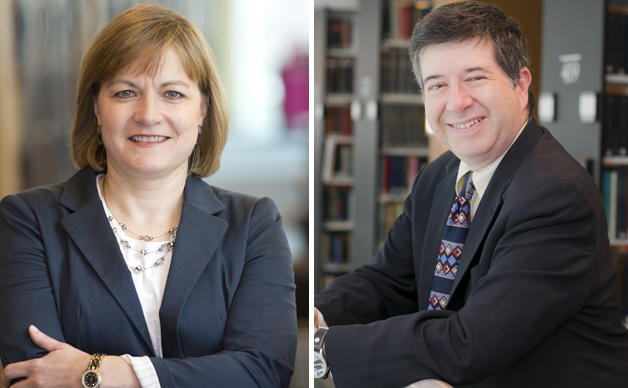
Law faculty honored for scholarly writing
Professors Polly Price and Jonathan Nash were recently honored for scholarly writing.
Price: Trump's citizenship proposal 'laughable'
President Trump says he's "thinking about" an executive order to revoke "birthright citizenship," the 150-year-old policy that any child born in the United States is automatically a U.S. citizen, the Daily Beast reports. "Revoking birthright citizenship has been pending in Congress for 20 years," said Emory Law Professor Polly J. Price, an expert on immigration law. "It never goes anywhere, not even to committee. If it were possible, somebody would have done it by now." Price went further. "Most people agree that Congress can¿t do that," she said. "Let alone the president on his own. No one's even thought that until a week before the election. It's just laughable in many ways."
Citizenship not clearly defined in candidate issue, Price says
The ACLU of Georgia sued Georgia's Secretary of State after candidate Maria Palacios was removed from the ballot, WABE reports. She's a Democrat running for the Georgia House. State law requires candidates to be citizens of Georgia for at least two years to qualify for elections. She's lived in Georgia for nine years, but became a U.S. citizen last year. Emory Law Professor Polly Price said the state constitution doesn't clearly define citizenship. "Everything is treated in terms of residency," she said. "It's not just in Georgia but it's in other states as well. What matters is how long you've resided somewhere, not whether technically you're a citizen."
Quarantine lawsuits rarely result in damage awards, Price says
The failure of nurse Kaci Hickox to collect any money after being held by state officials for 80 hours in a tent outside a hospital, even after twice testing negative for Ebola, illustrates the difficulties of getting compensated for allegations of excessive quarantine measures, the New Jersey Law Journal reports. Quarantine litigation now mostly concerns tuberculosis, says Emory Law Professor Polly Price. Litigants who feel their quarantine conditions are excessive have prevailed in court, but generally on petitions for injunctive relief, rather than cases seeking damages after the fact, she said.
Analysis: Maslenjak v. United States
When may the government strip a naturalized citizen of U.S. citizenship? The Immigration and Nationality Act makes it a crime to knowingly "procure" naturalization "contrary to law." Another statute makes it unlawful to knowingly make a false statement under oath in a naturalization proceeding.
DACA's survival odds hard to predict, Price says
The future of a program that protects young immigrants from deportation is uncertain, as some Trump administration officials say Deferred Action for Childhood Arrivals, or DACA, will likely not stand up in the courts, WABE reports. Many states sued the Obama administration over the program, but the Supreme Court deadlocked on the issue. Emory Law Professor Polly Price said while the Supreme Court now has nine justices, it's hard to predict how they would rule. "It's not clear yet how they would have ruled if they'd been presented with DACA itself," she said.

Faculty members honored with named professorships
Richard Freer has been named Charles Howard Candler Professor. Michael Kang has been named Thomas Simmons Professor. Jonathan Nash has been named Robert Howell Hall Professor. Polly Price has been named Asa Griggs Candler Professor. Teemu Ruskola has been named Jonas Robitscher Professor.
'Dreamer' student's DACA revocation reflects new deportation priorities, Price says
One Georgia "dreamer" has had her Deferred Action for Childhood Arrivals protection against deportation revoked. Emory Law Professor Polly Price says the action reflects the new administration's deportation priorities. Jessica Colotl, who works as a paralegal, got a mailed notice this week that her DACA status was terminated. "It's emblematic of the broader scope that ICE has taken recently in terms of who they're targeting and what their priorities might be," Price says.
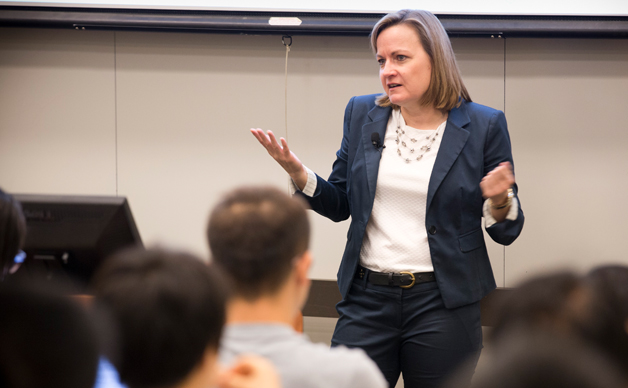
Emory law, global health professor named Carnegie Fellow
Polly Price, professor of law and global health at Emory, is one of 35 recipients of the prestigious 2017 Andrew Carnegie fellowship, which funds significant research and writing in the social sciences and humanities.
Price discusses Trump travel ban's legal hurdles
The Trump administration is struggling to revise its executive order limiting travel to the United States for citizens of seven majority-Muslim countries, McClatchy News reports. A new order needs to address two key aspects to prevent another suspension, Emory Law Professor Polly Price says. It must honor green-card holders' permanent resident status and not apply to the temporary visas of those already here. It also needs a better justification of why these countries are being singled out so it doesn't appear to be based on religion. "It's reasonable to believe that green card holders would have constitutional rights, at least to some degree," she said. However, temporary visitors who haven't yet entered the U.S. "don't have any rights that we can review."
CNN interviews Price about Trump's travel ban
Emory Law professor Polly Price spoke with CNN's Jonathan Mann about the real-life and legal implications of the suspension of President Trump's travel ban. She doesn't expect a quick decision on the merits of the case, calling it an enormously complex issue. However, Trump's argument that his executive order is not subject to judicial review could set up a constitutional conflict, she says.
Price comments on Trump travel ban
Immigration law experts, including Emory Law Professor Polly Price. raised concerns about President Trump's recent executive order which affects immigrants and refugees from Muslim-majority countries. "Green card holders cannot be rejected from returning to the U.S. without a hearing before an immigration judge," she tells the Atlanta Journal-Constitution. But you can still be detained, and there's no guarantee of a speedy hearing. Immigration courts have a backlog of around 10 months, she said. "A green card gives you legal rights," Price said. "You can't be returned without due process." Temporary travel privileges, such as tourist or student visas, guarantee nothing. "There's no appeal at almost any stage," Price said. '"Most of the decisions aren't reviewable. If you look Middle Eastern, you're in for a difficult time."

Price lectures at U.S. Supreme Court on immigration law history
While the president, Congress and the U.S. Supreme Court continue to clash over immigration, Professor Polly Price, a legal historian and expert in immigration and citizenship, says 19th century case law is still a powerful influence. Price was invited to the U.S. Supreme Court to deliver the lecture, "The Supreme Court and the Chinese Exclusion Cases." The 2016 Leon Silverman Lecture, delivered May 11, was derived from Price's research on citizenship and immigration law, and given in the court's main courtroom.
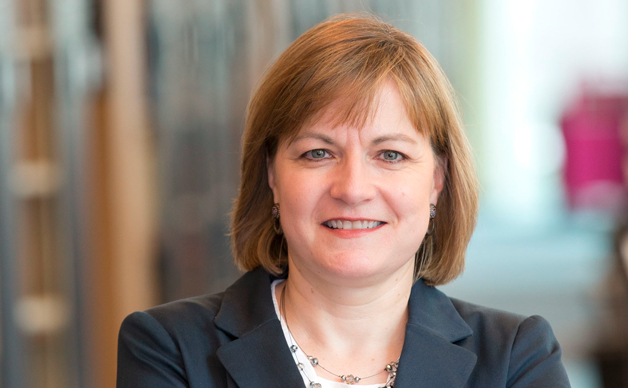
Professor Price will give a lecture at the US Supreme Court on May 11
Professor Polly J. Price will give a lecture at the US Supreme Court on May 11.
Price on Syrian refugees: Immigration process is rigorous
Professor Polly Price commented on the story of Jamil, a Syrian who fled the civil war and spent two-and-a-half years trying to immigrate to the United States. He arrived in Georgia the day of the Paris terror attacks. "We don't take for granted they are who they say they are," Price said. "We get into the weeds. 'Tell me about your village. Where did you live? What do you do for a living?' Then [resettlement agents] will repeat it several days later to make sure their story doesn't change."
Trump proposal to repeal birthright citizenship would be nightmarish, Price says
Donald Trump has revealed his immigration plan, including a controversial proposal to end granting automatic citizenship to any child born on U.S. soil, Mia Bush writes in Voice of America. Professor Polly Price says most people don't understand the potential administrative nightmare that would be created by repealing the 14th Amendment. Repeal would affect everyone, Price said, adding that anyone in the U.S. needing to prove their citizenship--when applying for a driver's license or a Social Security number, for example--would be required to prove their parentage.
Trump wrong on birthright citizenship, Price writes in The Hill
Presidential candidate Donald Trump's call to deny U.S. citizenship to the children of undocumented migrants misleads the public, Professor Polly Price writes for The Hill. "Whatever the merits of his proposal to change the rule of birthright citizenship, it cannot be accomplished through legislation by Congress," Price says. "If the rule is to be changed, it must be through the arduous process of amending the federal constitution." Price calls such proposals "racial measures in their purpose and effect."
Denying health services to non-citizens weakens overall public health, Price says
As we saw with the Ebola outbreak in West Africa, the overall health of a population is a key component in the emergence and spread of contagious disease. But sovereign boundaries and distinctions between citizens and non-citizens undermine public health in the United States. State and local public health departments are the primary defense against contagion. But US public health agencies--already under-resourced because public funding is politically tenuous--must work within a system in which citizens and non-citizens are segregated with respect to access to health care.
Price for The Hill: McCain, Congress should lead fight against drug resistant TB
This month, Sen. John McCain lobbied to prevent the release of an immigration detainee diagnosed with drug-resistant tuberculosis. McCain did so on behalf of Pinal County, Ariz., which faced staggering medical costs to treat the patient and to prevent further spread of a dreaded and difficult to treat disease. That's the right thing to do, says Professor Polly Price. But she argues it shouldn't be a one-off solution.
Price quoted in "Emory after Ebola: Teachable moments"
As Emory experts continued to treat Ebola patients throughout the fall semester, they also consulted and shared protocols with health care providers around the world. Meanwhile, Ebola inspired a "teachable moment" in classes ranging from biology to business and epidemiology to ethics. Polly Price, professor in the School of Law, included Ebola in classes she taught on immigration law and an introductory course on legislation and regulation.
Price examines Ebola, pandemic law with Emory medical experts at Florida "Back to Class"
On Saturday, January 24, the Emory Alumni Association hosted "Back to Class: South Florida" at the Westin Colonnade Hotel in Coral Gables. The program featured five faculty members sharing expertise on diverse subjects including Ebola, quarantine, infant communication, and the history of Oxford College and Emory.
States will benefit from Obama action, Price says
President Obama's executive action on immigration will likely benefit state government by helping the economy and easing a costly burden on child services programs, including state care of U.S. citizen children whose parents might otherwise be deported, says Emory Law Professor Polly Price.
Price on WABE: Obama's order on immigration is defensible
Professor Polly Price's extensive interview on WABE examined the legal doctrine behind President Obama's executive order on immigration. The use of executive action isn't anything new, but the scope, or number of people it affects breaks new ground, Price said. However, until Congress passes legislation, the president's action is defensible, and states will likely be unsuccessful in challenging it.
Price discusses effects of Obama's executive order plans for immigration
On Second Thought Radio, Professor Polly Price discusses the possible impact of President Obama's intention to use an executive order to set new immigration policy. The proposal would affect members of "mixed" families--those that have a U.S. citizen child or spouse, and other immediate family members who are undocumented, Price said. The order would protect up to five million unauthorized immigrants from the threat of deportation and provide work permits.
Price on GPB: Georgia may be testing ground for immigration issues' impact on elections
Immigration issues have been in the forefront of U.S. politics for several years, and in 2011, Georgia passed one of the strictest immigration laws in the country. Emory Law Professor Polly Price discussed how immigration may influence both state and national elections, on Georgia Public Broadcasting's "On Second Thought" radio show. She notes Georgia has the country's sixth-highest Hispanic population, and that immigrants now represent 13 percent of the U.S. population.
Price in Time: Mandatory quarantine for nurse Kaci Hickox can influence other states' ebola policies
Emory University law professor Polly Price says if the court decides in favor of the Maine health officials, other states may "feel free to post armed guards outside of asymptomatic people's houses, or confine them in an institution."
Price quoted in Time on voluntary vs. court-ordered quarantine
Professor Polly Price was quoted in Time magazine in an article about the legalities of quarantine for those who may have been exposed to Ebola. "If healthcare workers resist signing the voluntary quarantine or defy its recommendations after agreeing to it, Emory University law professor Polly Price says that it's likely an official quarantine would be ordered. 'They could go and get a court order to formalize it, possibly even after the fact,' Price says. 'But they would likely seek a formal quarantine.'"
Professor Price, Emory attorneys: "Ebola in the U. S.: A Discussion of Legal Issues" (video)
Emory experts provided insights into the legal ramifications of potential medical emergencies
Price, Emory attorneys discuss legalities of Ebola treatment, quarantine
A top lawyer at Emory University said Tuesday that even with a decade of planning, the school's health care system had to deal with unexpected issues--including legal matters--as its campus hospital began treating Americans who contracted the Ebola virus in West Africa. A panel discussion at Emory Law included Professor Polly Price, an expert in public health, and a lawyer who serves on the school's police force.
Price in WSJ: How does U.S. administer quarantine during health emergencies? (subscription required)
The revelation that a second Texas health-care worker diagnosed with the Ebola virus flew from Dallas to Cleveland and back has raised a looming question: Why wasn't she quarantined before boarding a plane? The answer lies in a layered health-care system that relies on close coordination between state, local and federal authorities to be effective in stopping disease. Professor Polly Price says the federal government's quarantine power derives from a late 19th-century compromise between state and federal lawmakers.
Ebola and the law: a discussion of public health authority and its practical limits
An important part of preparedness for public health emergencies is legal preparedness.
Price in the Wall Street Journal: How law informs Ebola response
The aggressive response that health officials have mounted to the Ebola virus in Dallas is likely to prevent a wide-scale outbreak. But multiple snafus reveal some unexpected issues the U.S. would have to prepare for in the event of a larger-scale infectious disease threat, the Wall Street Journal reports. Quarantine is an important element of preventing its spread. "We don't have a lot of experience with quarantining well people," says Emory Law Professor Polly Price.
Price on federal, state law governing Ebola, public health
Laws that authorities may use to prevent an Ebola outbreak in the United States are designed to work best for a disease with a much shorter incubation period, says Emory Law Professor Polly Price. In the U.S., an attorney is provided to someone who wishes to challenge their quarantine or isolation. But, Price said, "Whenever the judges have a public health person in their courtroom telling them there's a threat, they're not going to second guess." Price's public lecture, "Ebola in the U.S." will be held at Emory Law, Oct. 14 More info
Price on Nevada Public Radio: U.S. needs to rethink tuberculosis treatment
Professor Polly Price argues that we need rethink the way we leave detection and treatment of tuberculosis to thousands of small local health authorities across the country. The problem cannot be handled by local government authorities when it is brought in by foreign travelers and spread across the country.

Fragmented U.S. health care unprepared for rising tuberculosis, Price says
Presently, U.S. healthcare is politically and legally fragmented, underfunded and disproportionately strained in many poor communities, making tuberculosis hard to treat.
Fragmented health care makes tuberculosis hard to treat in U.S., Price writes in Newsweek
Tuberculosis is back, and nastier than ever, Professor Polly Price writes in Newsweek.
Price receives Robert Wood Johnson fellowship to study tuberculosis at U.S. border
As the debate on U.S. immigration reform continues in Congress, Polly Price, professor at Emory University School of Law, will study a lesser-known, public health component of the issue -- the rise of multidrug-resistant tuberculosis along the southern U.S. border.