Have mercy
There’s a place for tradition, and a place for evolution. Good lawyers understand this.
Kay Levine, Richard H. Clark Professor of Law at Emory Law, has focused her academic career on studying how the justice system works on the ground. “What motivates me is not what the formal law says, but how the people we charge with animating the formal law—how do they behave? That’s what I want to know,” she says. Her research challenges others to go beyond face value and appreciate how the law truly works.
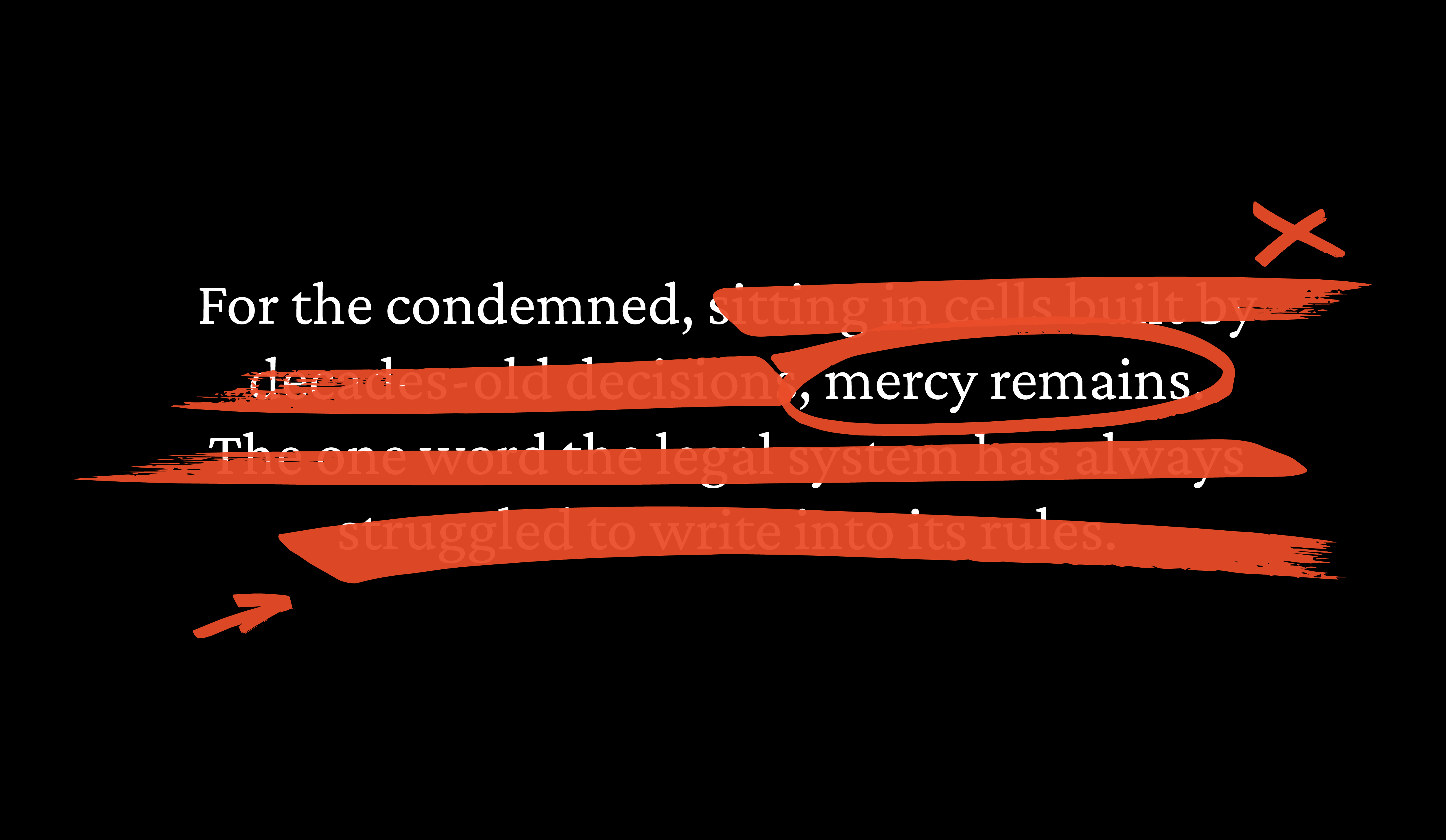
Over the past few years, Levine and her writing partner, Ronald Wright, Needham Yancey Gulley Professor of Criminal Law at Wake Forest Law, have been exploring the concept of resentencing: the process by which a judge imposes a modified sentence on a person convicted of a crime. “Resentencing has been positioned as an important supplement to parole and clemency… The whole point behind these initiatives is to offer a second chance, to give some measure of hope and mercy to people who were convicted of serious crimes,” says Levine.
Levine and Wright contribute to the conversation on resentencing by interviewing key figures across multiple legal jurisdictions, comparing resentencing with other post-conviction tools, and identifying successes and potential issues—all within an academic context. Their research is funded by a grant from the Wilson Center for Science and Justice, which is housed at Duke Law School. The Center, through a competitive application process, funds empirical policy work on criminal justice issues. As part of their Resentencing Project, Levine and Wright have developed four academic articles.
Their first article, “Between Cooperation and Conflict in Second Look Sentence Review (2023),” developed from a symposium hosted by Cardozo School of Law. The theme of the symposium was “the multidoor courthouse.” Participants presented research on the novel pathways that criminal cases take and how the courthouse connects to the community. In their article, Levine and Wright looked at the tension between cooperation and conflict in the way that resentencing matters are being handled. They explored the imbalance in the relationship between prosecutors and defense attorneys in resentencing cases—an enhancement, Levine and Wright argue, of prosecutorial power.
The article “Legislatures and Localized Resentencing (2024)” was developed from a symposium hosted by the Journal of Criminal Law and Criminology at Northwestern Pritzker School of Law. This symposium looked at the conflict between county and state governments, particularly in red states with blue local governments. In researching this piece, Levine and Wright uncovered a more dynamic relationship than expected. In jurisdictions where resentencing programs have recently been enacted, they found that authorization occurred at the state level, with implementation and diverse approaches happening at the local level. Levine and Wright argue that this hybrid model is the only way that resentencing measures will be passed.
Levine and Wright wrote “Abuse Survivor Resentencing (2026)” as part of a symposium co-hosted by Stanford Law School, The Ohio State University Moritz College of Law, and the Federal Sentencing Reporter. The event brought together academics and practitioners in the second-look sentencing space. Levine and Wright presented their research on a new strain of resentencing that provides opportunities to abuse survivors who committed their crimes as an outgrowth of that abuse, but whose abuse was not adequately considered at the time of their trial or sentencing. Abuse survivor resentencing currently exists in six states, where it operates as a corrective for oversights from prior decades. Levine and Wright investigate the statutory schemes that have emerged in these six states, paying special attention to Oklahoma, which they argue has staggering rates of imprisoned abuse survivors combined with legal actors who could potentially dilute and undercut advancements in resentencing. “It’s a cautionary tale,” Levine says, “You don’t ever want to say, ‘Pass the law, and we’re done,’ if there is not a consortium of people on the ground who agree that resentencing should be happening.”
Levine and Wright’s fourth Resentencing Project article, “Resentencing as Mercy,” has been accepted for publication in the Ohio State Journal of Criminal Law, which is a peer-reviewed journal; faculty at The Ohio State University’s Moritz College of Law select the articles for publication. “We are thrilled that the journal was willing to take our full-length piece,” says Levine. “We see it as a sign of their real enthusiasm for the substance and importance of what we’re writing about.” In this article, Levine and Wright document the emergence of resentencing initiatives around the country as a supplement to parole and clemency and a means of providing post-conviction relief to prisoners serving lengthy sentences. “Resentencing as Mercy” is modeled as an oral history, with the authors conducting more than 90 interviews in 11 different legal jurisdictions. They examine the meaning of “mercy,” how resentencing emerged as a matter of formal law, how these initiatives work, who is empowered by the programs, and the real-world impact that resentencing has produced.
Levine and Wright’s Resentencing Project articles have already made a significant impact within the legal and academic communities. Their work has received generous funding and has been featured in symposia across the US. In the near future, their writings will be excerpted in a leading casebook on sentencing law. Levine hopes her work will also have an impact on the criminal justice system itself: “Our justice systems are evolving toward justice. Prosecutors are recalibrating their role in the system, and judges are willing to go out on a limb. Resentencing has helped hundreds of people around the country—hundreds of people have a chance at a second life, to become members of a community, to be involved with their families. That help is incredibly important. It’s just that there aren’t enough of those people,” says Levine. “Probably the only way to turn it around is to take resentencing out of the political process. For more states to put their money where their mouth is. When these resentencing initiatives get adopted, the sky’s the limit.”
In addition to her research and written work, Levine is also bringing these lessons about resentencing to the classroom. “I think resentencing is, ultimately, a story about humility—a justice system at its best. And lawyers are at their best when they are willing to revisit how things went wrong in prior eras,” she says. “We have to be willing to evolve towards justice, and I would like to think that at Emory Law, we train our lawyers to recognize that. Part of being an Emory Lawyer is not just being ethical, but acting with a sense of humility and being willing to be introspective. If you want to be a change agent, you have to understand how the law actually works.”
Email the Editor
