Sag files amicus brief in litigation against OpenAI and Microsoft
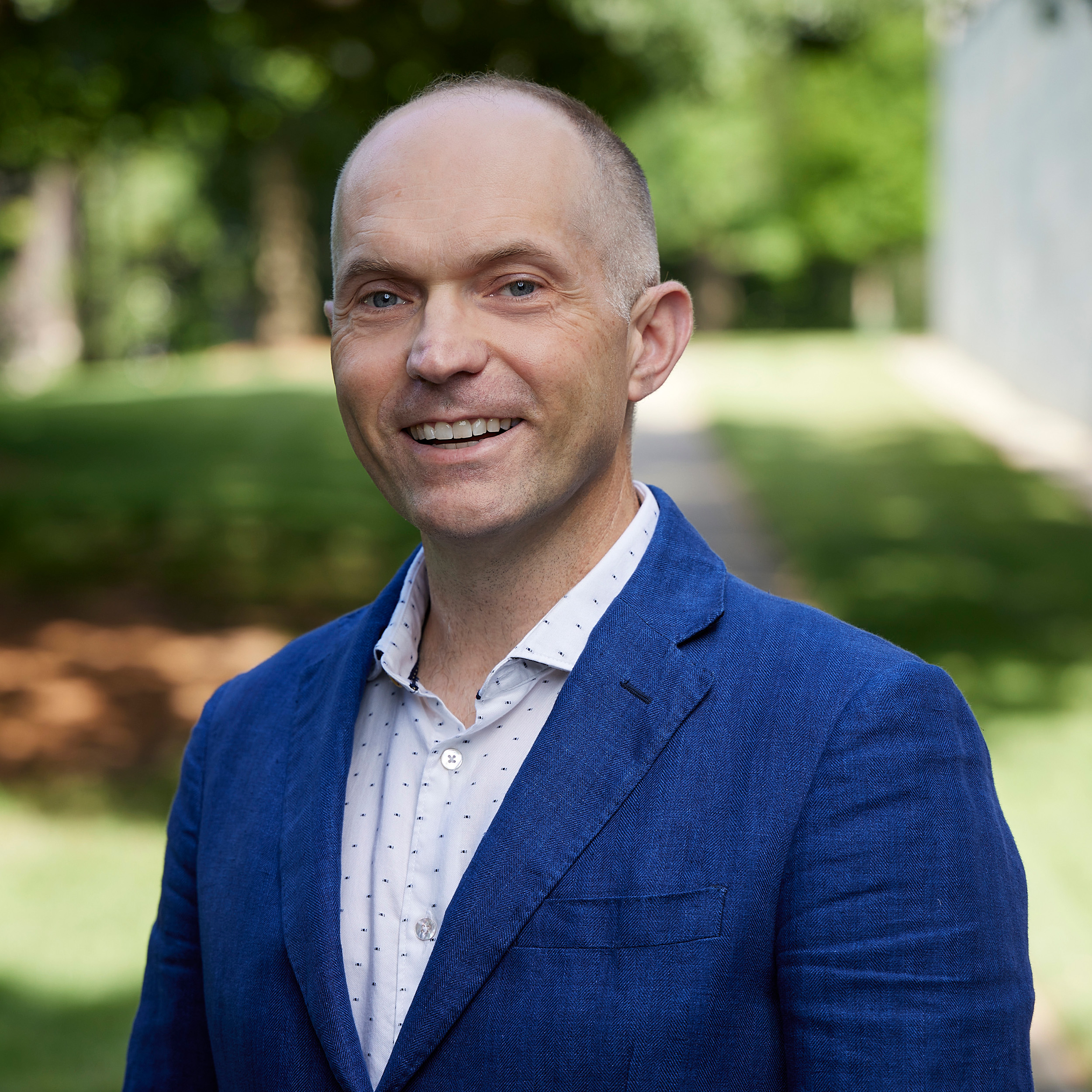
Matthew Sag, Jonas Robitscher Professor of Law in Artificial Intelligence, Machine Learning, and Data Science at Emory School of Law, recently filed a brief as amicus curiae in In re OpenAI, Inc. Copyright Infringement Litigation, the multidistrict litigation in the U.S. District Court for the Southern District of New York that consolidates copyright suits brought against OpenAI and Microsoft by The New York Times, the Daily News and other newspapers, The Intercept, the Center for Investigative Reporting, Ziff Davis, and a proposed class of book authors led by the Authors Guild.
The cases are before Judge Sidney H. Stein, who is now considering cross-motions for summary judgment on whether training large language models on copyrighted books and news articles is fair use. The ruling will be the first on that question in the Second Circuit, arguably the nation’s most influential copyright court, and the first anywhere to address the claims of news publishers.
Sag’s brief supports neither side. It draws on more than fifteen years of his scholarship on how copyright law should treat technologies that must copy works in order to analyze them, from search engines and plagiarism detectors to text and data mining and, now, generative AI. That body of work, which introduced the concept of “non-expressive use,” has been cited by courts in the United States and abroad, including in one of the two decisions last year that found AI training to be fair use, Kadrey v. Meta Platforms.
“Copyright protects authors against expressive substitution: the use of their original expression in a way that stands in for it in the eyes of the public,” Sag said. “On the record in these cases, training a language model does not do that. The models learn statistical patterns from billions of examples and respond to prompts with new text, not with copies of what they were trained on. That is what makes the training transformative, and it is also why the licensing and ‘market dilution’ harms the plaintiffs describe are not the kind of harm copyright recognizes.”
The brief argues that the summary judgment record shows regurgitation of the plaintiffs’ works is rare under realistic conditions, and that the plaintiffs’ own experts extracted only fragments, and only through millions of adversarial prompts that no member of the public would use. It also explains why a licensing market for AI training data at internet scale cannot exist: the training corpora at issue contain the work of a large fraction of everyone who has written anything online, and the marginal value of any one work is close to zero.
At the same time, the brief identifies two questions on which Sag says the court should proceed carefully. One is whether a narrower form of harm, which he calls “indirect expressive substitution,” could be cognizable where a system is built from a specific source in order to replace it, a theory he first proposed in a 2024 Fordham Law Review article that the Kadrey court relied on in describing “market dilution.” The other is how the court should treat OpenAI’s early use of books obtained from so-called shadow libraries, which Sag argues belongs in the fourth fair use factor as a question of whether a lawful market for access was bypassed, rather than being treated as a separate, non-transformative use.
“Together with the Bartz and Kadrey cases in the Ninth Circuit, these cases will set the terms on which the next generation of AI is built in this country,” Sag said. “My aim is to help the court get the doctrine right, whoever wins on these particular facts. Fair use has handled every copy-reliant technology of the past two decades very well, and it can handle this one if the court keeps its eye on the question that actually matters: whether anyone’s expression is being substituted.”
Amicus briefs in the litigation were due October 30, 2026, under an order from Judge Stein. Sag was one of the lead authors of the influential “Digital Humanities Brief” in the HathiTrust and Google Books cases a decade ago. Sag argues that those cases set the template for how courts in the Second Circuit will look at nonexpressive uses by copy-reliant technologies.
The brief is available at https://matthewsag.com/wp-content/uploads/2026/10/Sag-Amicus-Brief-In-re-OpenAI-Copyright-Litigation-SDNY.pdf.
Professor Sag's blog post about the brief is available here: https://matthewsag.com/amicus-brief-openai-copyright-litigation/